Virtual Shade Matching
Kendo sought a guide for a virtual foundation shade match consultation that demonstrated best-in-show professionals doing their thing. This is part of a larger shade matching series employed by Kendo to promote sales behaviors for selling their products.
AUDIENCE
These modules were designed for use by our national field team and global retailers to learn different aspects of makeup and selling beauty products.
RESPONSIBILITIES
Instructional Design
Storyboarding
Action Mapping
eLearning Development
TOOLS
Articulate Software
Adobe Photoshop
Adobe Illustrator
Microsoft Office Suite

Problem
In the post-covid retail landscape, Kendo adopted Virtual Shade Matching services to support sales and provide options for clients curious about our products. With such variable consultation styles, Kendo sought a standardized guide to enhance selling behaviors and ultimately boost conversion sales.
Solution
Authentic modeling is a powerful way to capture the nuances of the art of a professional consultation. I proposed having industry pros create video demos with clear steps for learners followed by retention to be integrated into a comprehensive training curriculum.
My Process
01
DEFINE THE GOAL
Through researching and action mapping, I analyze learner’s needs, identify key performance problems, and determine a series of high-priority actions to address these issues.
02
DESIGN THE SOLUTION
After identifying key actions, I create an immersive storyboard showcasing real-life problems and their consequences. I also create a prototype with all necessary visual and interactive elements.
03
DEVELOP THE EXPERIENCE
Once I receive feedback and have a signed-off prototype; I use authoring tools to develop the entire experience with a focus on every detail. This step includes extensive testing and iterations.
DEFINE THE GOAL
Lights, camera, action
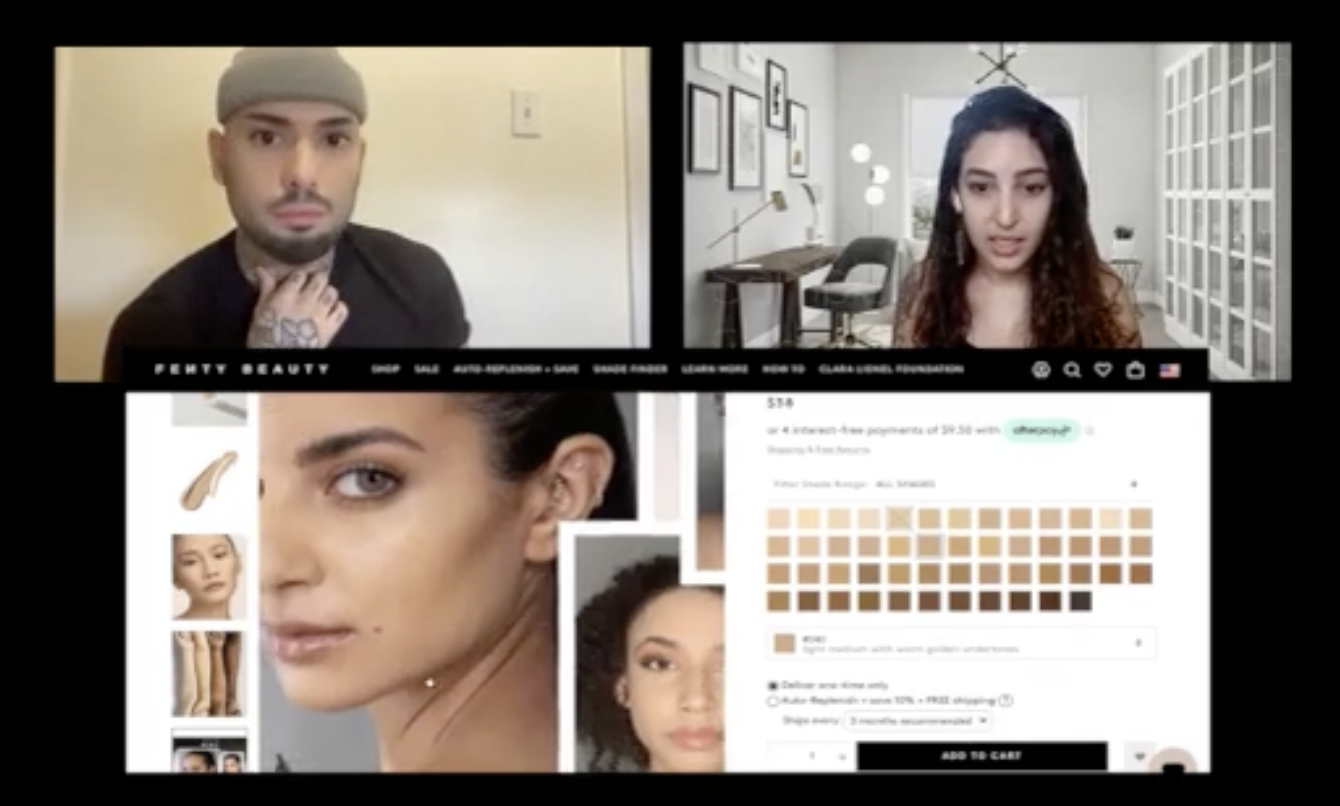
To boost conversion on their top grossing products, KENDO needed a standardized framework for how to conduct a best in show virtual consultation.
I orchestrated and filmed exemplary virtual shade matching sessions with professional trainers, and identified common mistakes through interviews with trainers. I also went undercover at Sephora for a firsthand observation.
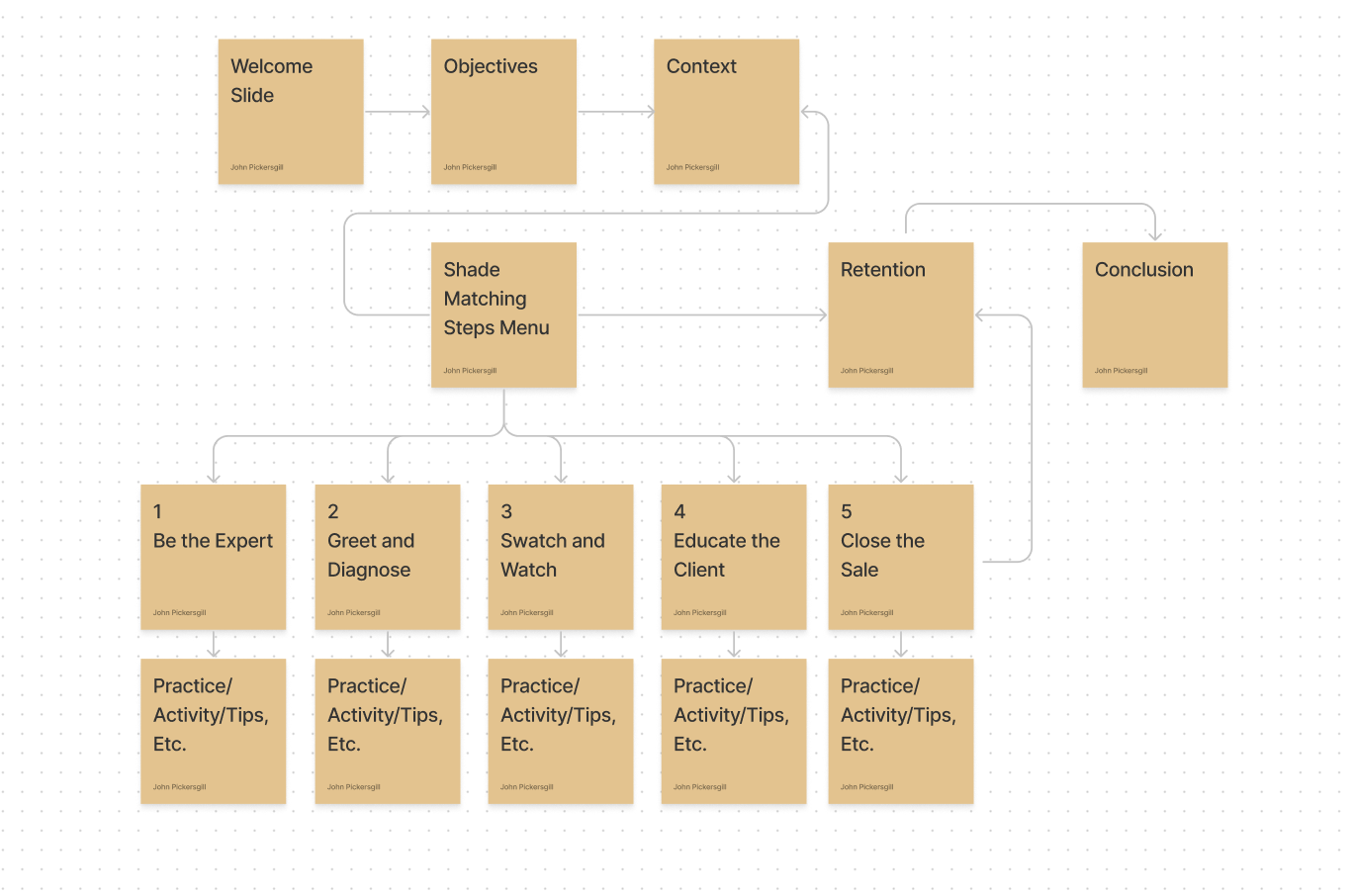
From these observations, I then created a content hierarchy and an action map to display the relation of the concepts being presented in the simplest and easy to digest format.
DESIGN THE SOLUTION
Options for Stakeholders
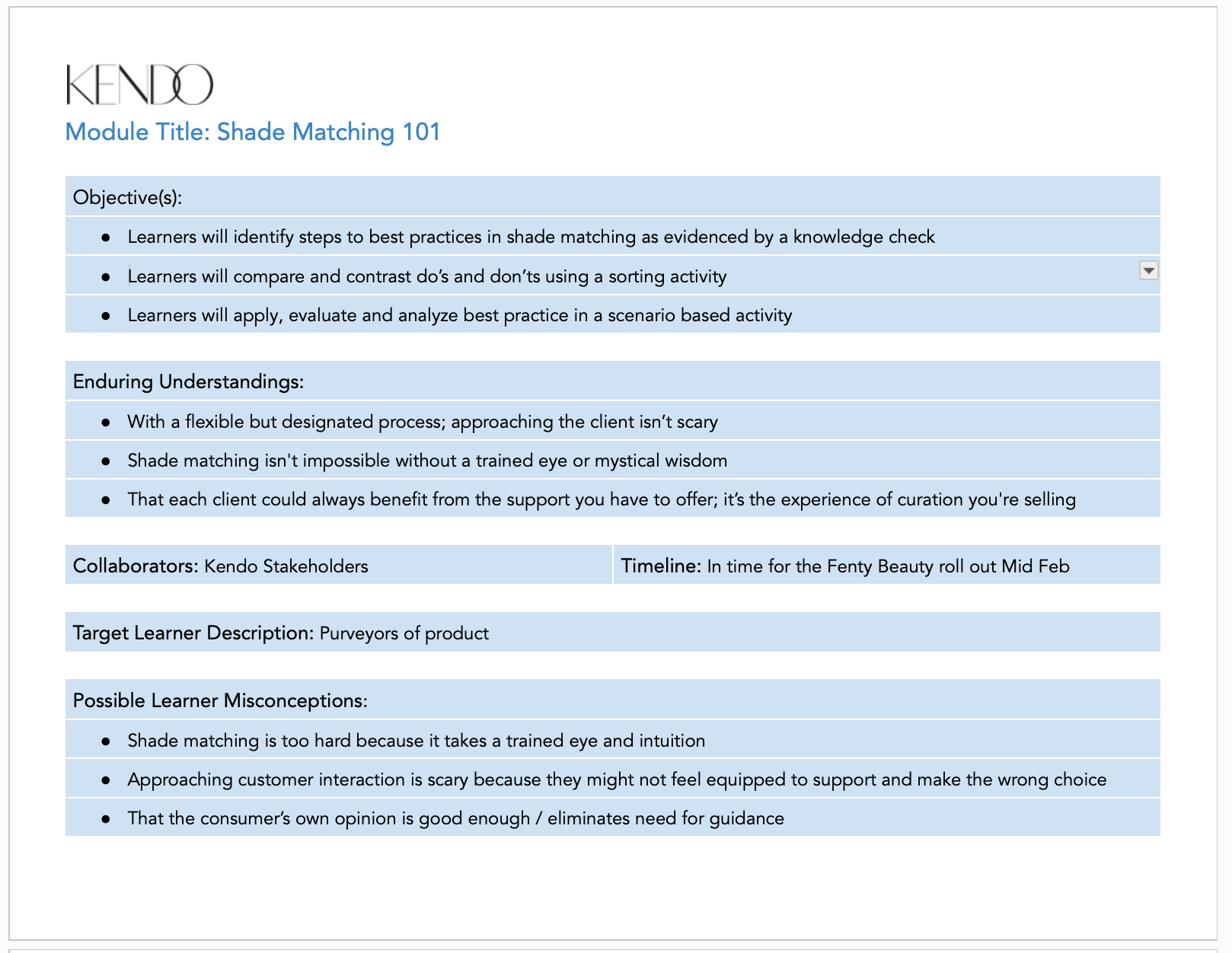
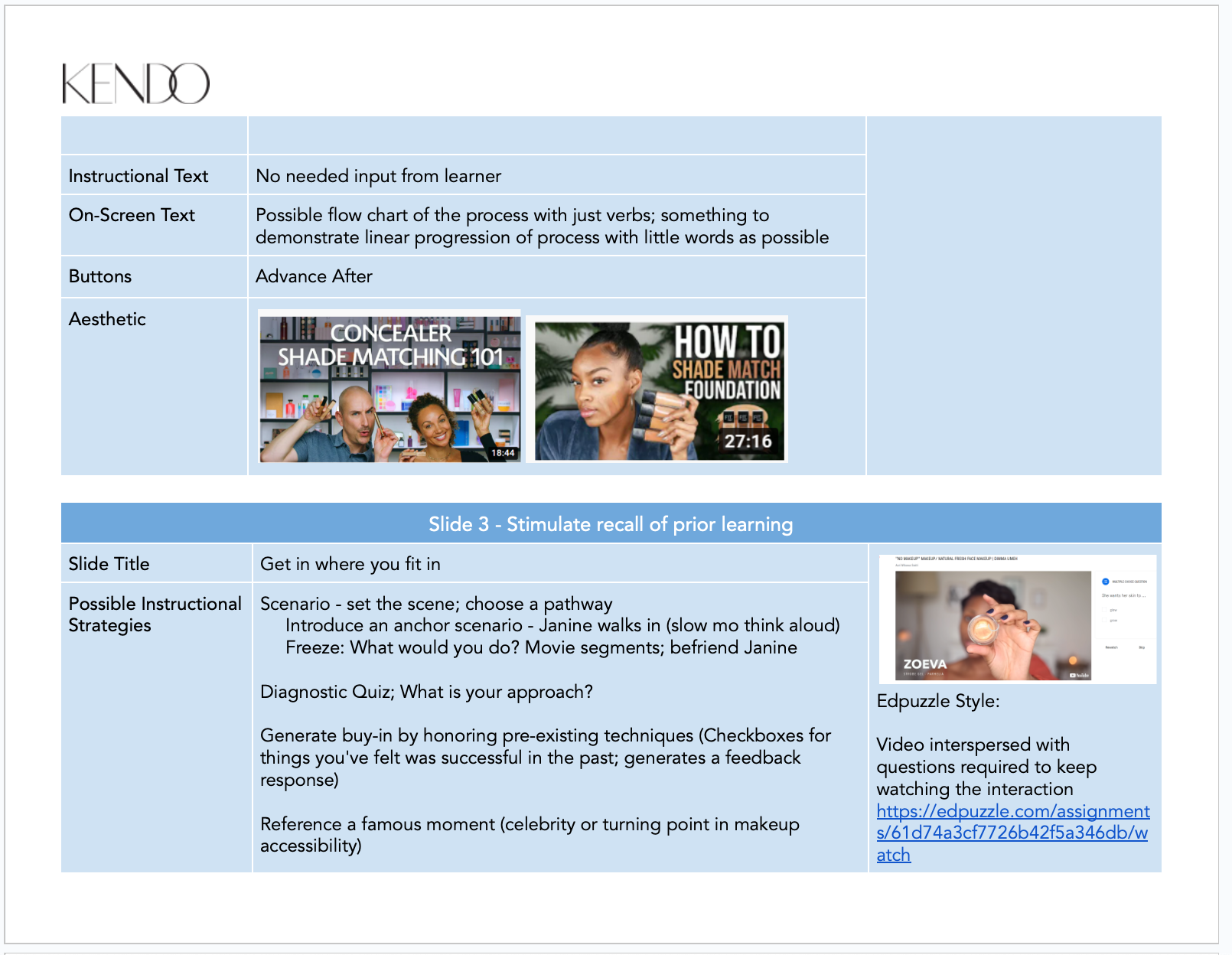
After distilling the research into steps and showcasing the flow of the learning, I created this text-based storyboard that offered options on how to expand upon the concepts and proposals for different educational strategies that could be used to present the info in an engaging format.
It also presented differentiated pathways for multiple learning styles and anticipated misconceptions to remedy potential learning gaps based on the prior research.
DEVELOP THE EXPERIENCE
Prototype + Reviews
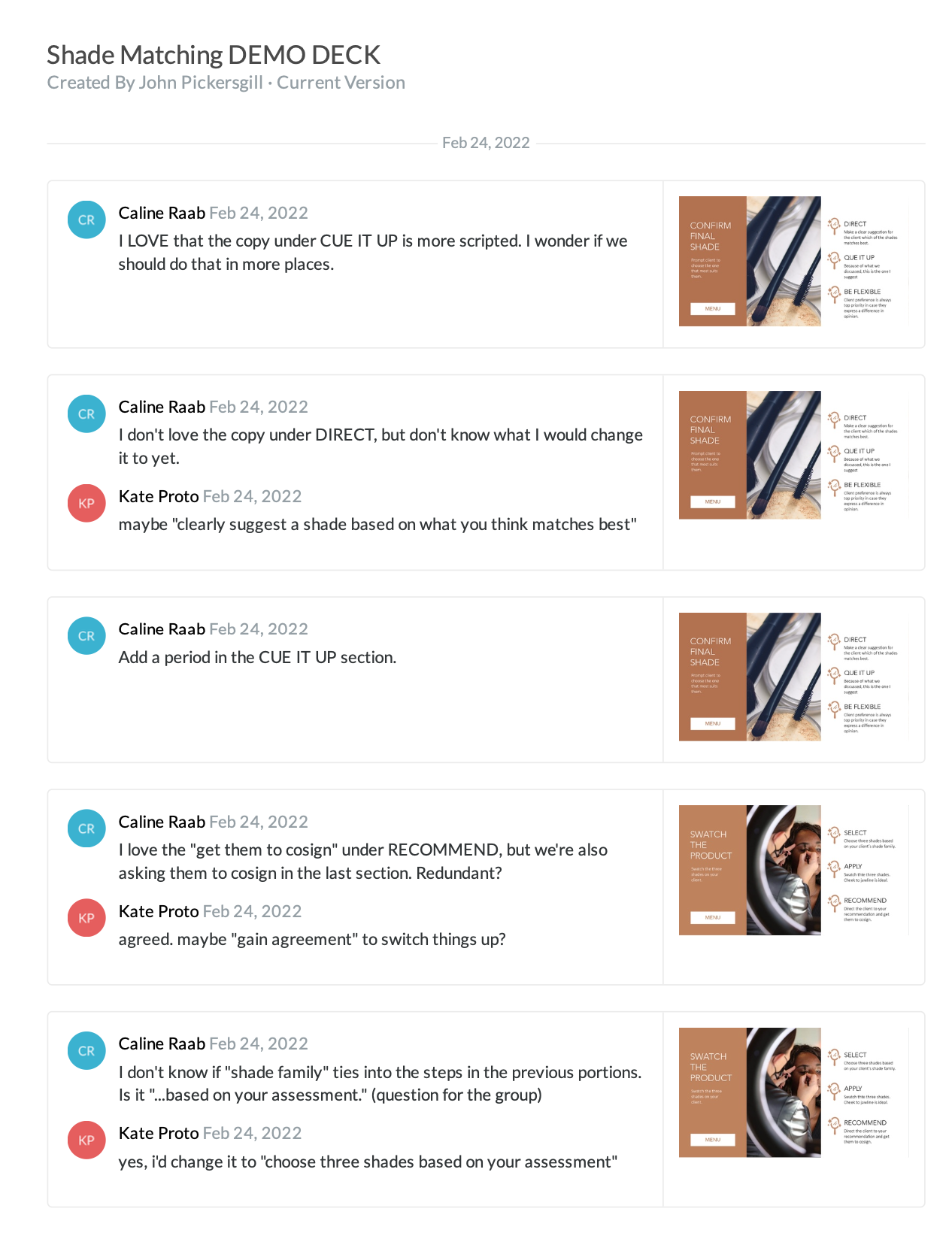
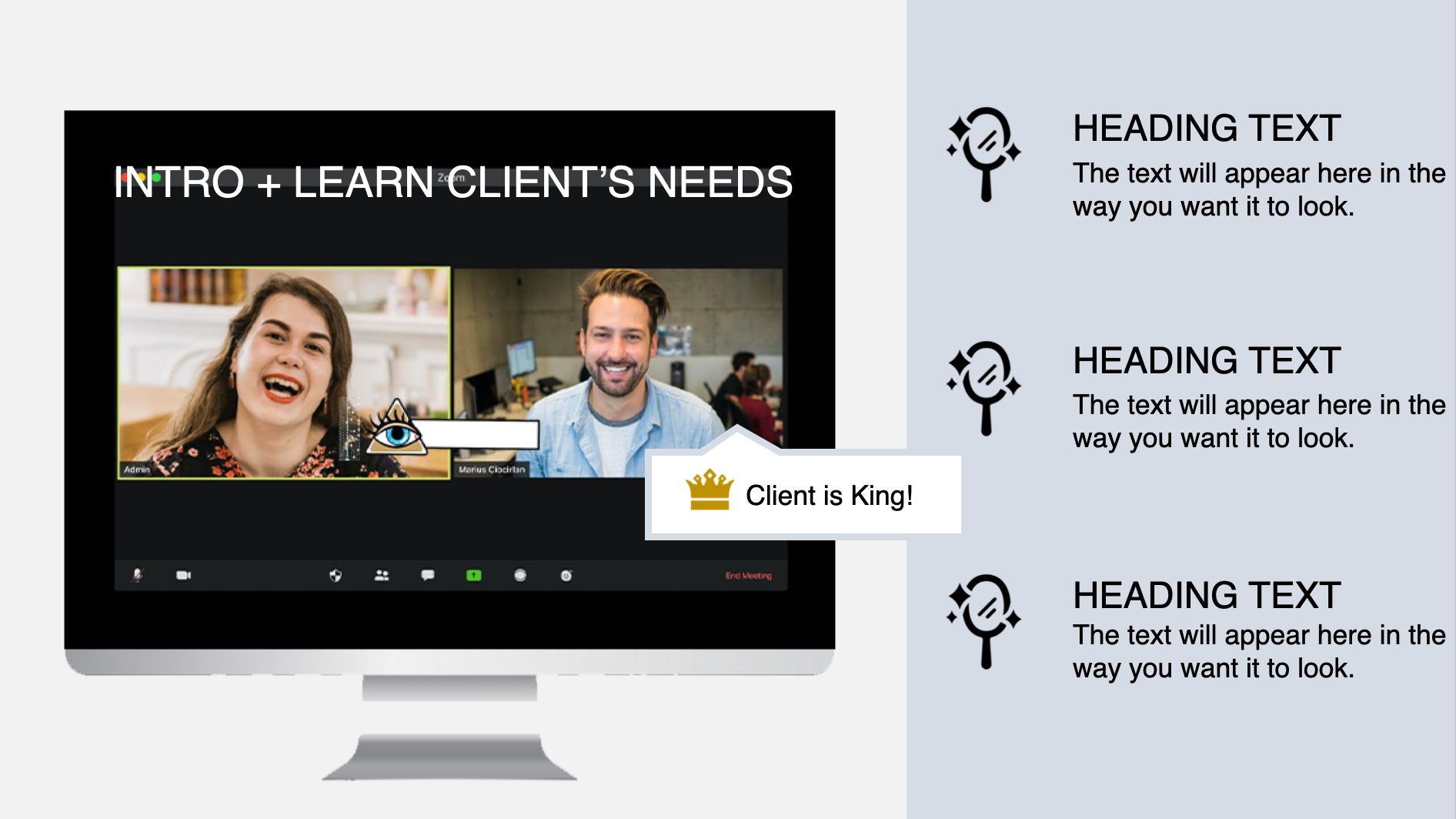
Upon aligning with stakeholders on the format of the e-learning, I built out a functional prototype that underwent several rounds of feedback to ensure that the product accurately represented the intended outcome.
The prototype evolved with consideration to shortening the copy, adjusting formatting for premium accessibility, and modifying the imagery included to showcase an optimally wide array of foundation shades for inclusivity.
RESULTS + TAKEAWAYS
Implementation
This module was launched on our company wide LMS and was translated and localized for international regions to use in their markets. Our team tracked retention to measure the efficacy of the e-learning in supporting learners.
Evaluation
A sampling of learners received follow-up emails with a survey asking them to rate the e-learning's real-life practicality, accuracy regarding objective alignment, and length. This module received an average of 3/3 stars for each category.
Succinct
Useful
Accurate
IMPACT
Fortune
The module was used in North America as part of a certification course for sales staff in the fundamentals of shade matching. The team used Repsly to track customer satisfaction data in correlation to average basket sales and conversion rates.
Pre-Implementation Sales Performance
Conversion Rate: 20%
Average Basket: $57
Customer Satisfaction Score: 3.5/5
Post-Implementation Sales Performance
Conversion Rate: 25%
Average Basket: $73
Customer Satisfaction Score: 4.2/5
While the data presented may represent various influences on the overall success of the company, there is a clear growth trajectory directly related to the efforts I made during the timeframe when I implemented the project.
Fame
I also took note that post-implementation, the professionals featured in the module all received promotions and assumed positions where they had more influence over implementing best practices for the benefit of the larger organization, and it could be deduced that this exposure supported their climb.
To see more projects visit my projects page!